Betty Kasoura
Betty Kasoura, née Betty, is a young Japanese woman living in the exclusive City of the Winding Mists district of San Francisco, where she and her husband Paul Kasoura occupy a modern apartment that reflects their sophisticated taste. She first appears in the novel when she and Paul visit Robert Childan's store, American Artistic Handcrafts Inc., where her large, dark eyes and gentle, sympathetic demeanor immediately captivate Childan, who imagines falling in love with her. Her presence there, examining a lovely ashtray, marks the beginning of a relationship that will expose the fragile dynamics of race and class in the Pacific States of America.
Identity and Introduction
Betty is introduced as a married woman, stylishly dressed with lacquered nails and pierced ears for long dangling brass handmade earrings, which she reveals were purchased at home, not from Childan's store. This detail underscores the novel's theme that contemporary American art is absent from such establishments, which only deal in the past. Childan notes her understanding eyes, which seem to glimpse his hopes and defeats, and he is struck by her beauty and the warmth of her gaze. She is part of the rising generation of Japanese who, unlike their elders, do not remember the prewar days, and Childan sees in her and Paul the hope of a world where "place" difference does not matter.
The Kasoura Dinner Party
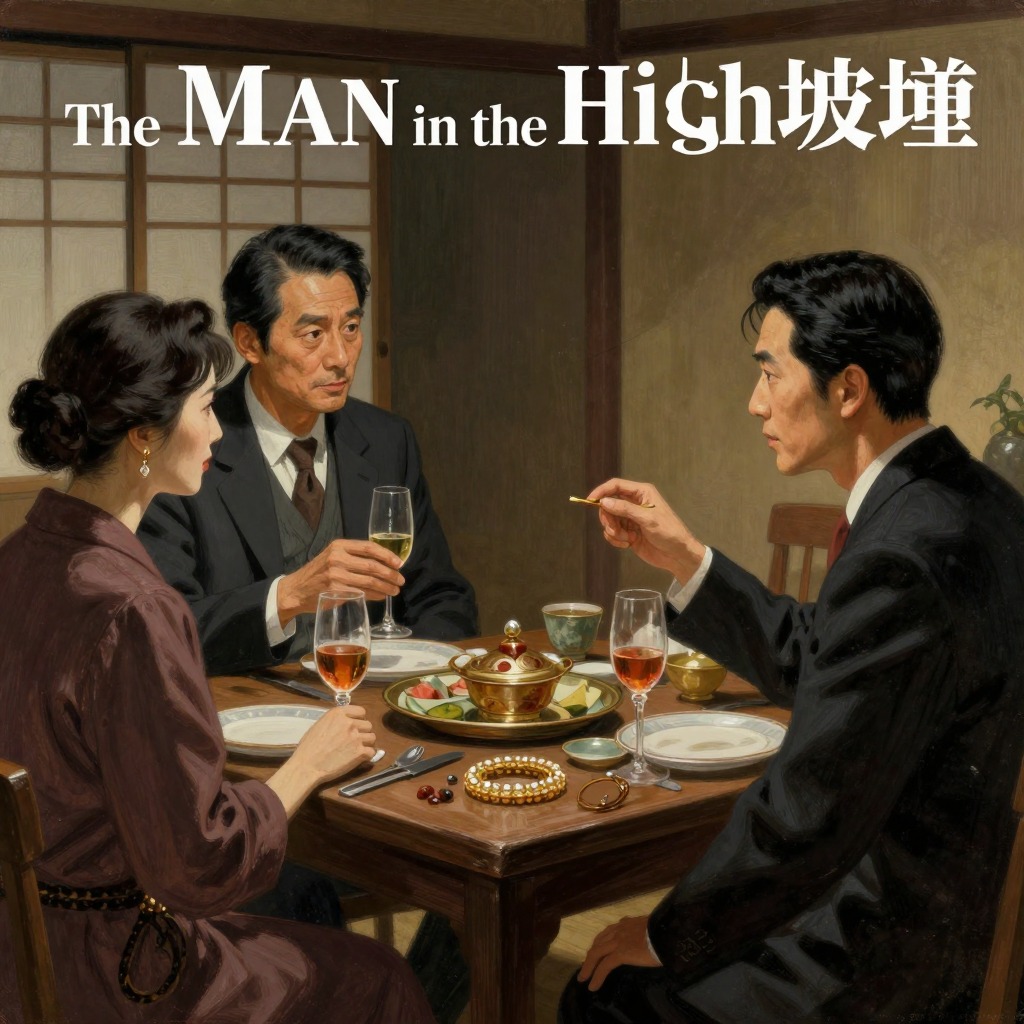
Betty and Paul invite Childan to their apartment for dinner, a social occasion that becomes a crucible for Childan's anxieties and prejudices. Betty, dressed in a silk kimono and obi, welcomes him with a smile, and the evening unfolds with careful etiquette. She serves a T-bone steak with baked potato and sour cream, an American dish she has prepared to please her guest, and later reveals that she shops in tiny American markets along Mission Street to achieve authenticity. During the meal, Childan's attempts to engage in political discussion, particularly about the death of Martin Bormann and the succession in the Reich, lead to awkward moments. Betty tactfully steers the conversation away from contentious topics, but when Childan asserts that the world would be much worse if Germany and Japan had lost the war, she quietly disagrees, stating that she does not believe in "hysterical talk of 'world inundation' by any people." Her calm defiance, marked by deep red spots appearing in her cheeks, reveals a strength beneath her composed exterior.
Relationships and Conflict
Betty's relationship with Childan is marked by a fundamental misunderstanding. Childan, despite his admiration, ultimately concludes that the Japanese are "not exactly human," that they are like "monkeys dolled up in the circus," and that their appreciation of American culture is merely imitation. He reflects that even the I Ching, which they have adopted, is Chinese, borrowed from long ago. Betty, for her part, seems to sense the unbridgeable gap between them, and after Childan's outburst about Jews running the world, both she and Paul appear to shrink, growing cold and distant. Yet Betty remains gracious, and when Childan later brings a gift of Edfrank jewelry, she is not disappointed, though Paul intercepts it. Her role in the novel is to embody the aesthetic and moral values of Japanese culture, which Childan both envies and resents.
Change and Ending
Betty's character does not undergo a dramatic transformation, but her presence catalyzes change in others. Childan's encounter with her and Paul leads him to a moment of self-awareness, where he recognizes his own humiliation and, in a rare act of defiance, rejects the importer's scheme to mass-produce the Edfrank jewelry as good-luck charms. Betty's quiet strength and her ability to see through Childan's pretensions contribute to this moment of clarity. In the end, she remains a figure of grace and restraint, a representative of the Japanese culture that both fascinates and intimidates the novel's American characters.
Thematic Significance
Betty Kasoura embodies the novel's exploration of historicity, authenticity, and the nature of art. Her appreciation of the Edfrank jewelry, which Paul later describes as possessing "wu," a quality beyond mere aesthetics, highlights the theme that true value lies not in historical provenance but in the present moment and the artist's intention. Betty's own aesthetic sensibilities, her love of wabi, the Japanese concept of finding beauty in simplicity, stand in contrast to Childan's obsession with the past. Through her, the novel suggests that the future may lie not in the relics of a defeated nation but in the new, authentic creations that arise from the present. Her character, though secondary, is essential to the novel's meditation on what it means to create and to appreciate in a world where history itself has been rewritten.